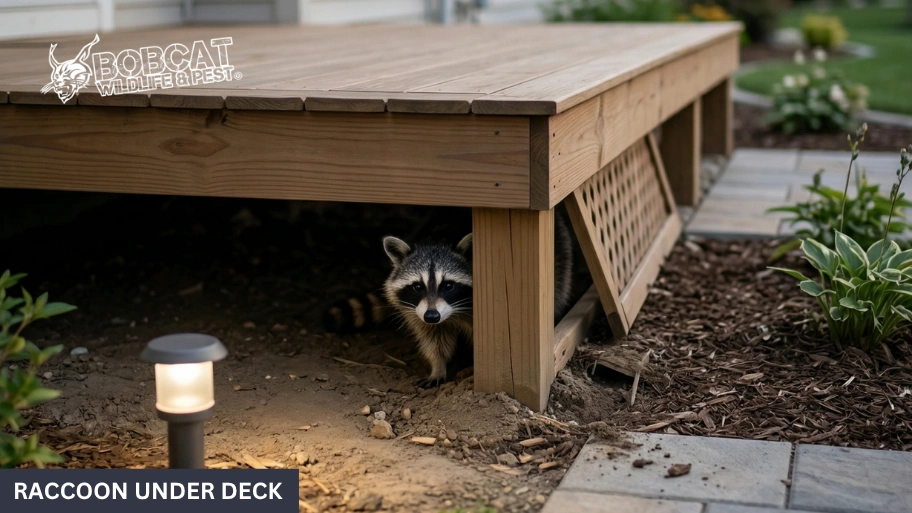
Quick Answer: How to Get Rid of a Raccoon Under Your Deck
To get rid of a raccoon under your deck, the goal is usually to make the area feel unsafe or uninviting so the animal chooses to leave on its own.
Before doing anything, check carefully for babies, then close off the access point after the raccoon is gone so it cannot return.
If the raccoon stays put or the situation seems risky, the safest next step may be professional raccoon removal.
Hearing Scratching or Noticing a Strong Smell Outside? There Could Be a Raccoon Under Your Deck
If you’ve started noticing sounds or smells around your deck after reading the quick answer above, that’s usually when things begin to feel more real.
Raccoons are quiet at first, but once they get comfortable, their activity becomes harder to ignore, especially at night.
Here are some of the signs homeowners in Iowa City tend to notice as the situation progresses:
Scratching, dragging, or shifting sounds that happen consistently after dark
Movement patterns that follow the same path under the deck or along the foundation
A strong, musky odor that lingers and doesn’t go away
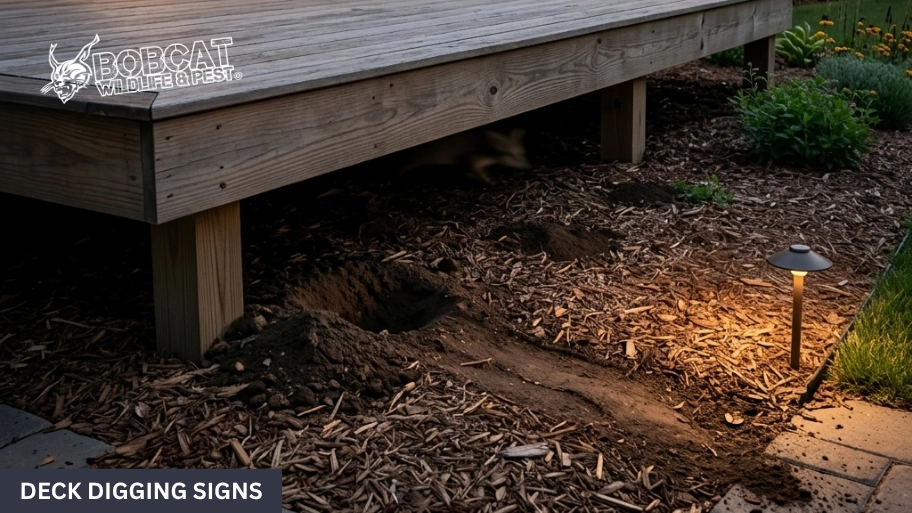
Fresh digging or widened gaps where the raccoon is getting in and out
One thing that’s often overlooked is how quickly this can escalate. What starts as occasional noise can turn into a fully established den within days, especially if the raccoon feels safe in that space.
From what Derek Brownmiller sees in Iowa City, by the time these signs are happening regularly, the raccoon has usually chosen that spot for shelter, not just a temporary stop.
If this lines up with what you’re experiencing, it’s a good sign that the situation has moved past a simple nuisance.
Before taking the next step, it’s important to understand what’s actually happening under your deck and how raccoons use these spaces.
Why This Is Happening to Your Home in Iowa City
If the signs you noticed earlier are lining up, the next question is usually why your deck in particular.
Raccoons don’t randomly pick a spot. They test areas first, then settle in where they feel the least resistance and the most protection.
Here’s what typically makes a home in Iowa City stand out to them:
Decks with low clearance that create a hidden, enclosed space
Areas where the ground stays soft or has already been disturbed
Gaps along the edges that aren’t obvious unless you’re looking closely
Consistent food access nearby, even something as simple as unsecured trash or leftovers
Another factor many homeowners don’t realize is how raccoons “learn” safe locations. If one finds a quiet, undisturbed spot, it’s more likely to return or even be reused over time.
This becomes especially common during spring and early summer, when female raccoons are actively searching for secure den sites to raise their young.
From what Derek Brownmiller sees around Iowa City, once a raccoon identifies a deck that offers shelter, low activity, and easy entry, it tends to treat that space as a reliable place to stay.
Even small, overlooked openings can be enough. And once they’ve committed to that spot, they’re not likely to leave without a reason.
How to Get Rid of a Raccoon Under Your Deck (What Actually Works)
If you’re trying to figure out how to get rid of a raccoon under your deck, the goal is straightforward: encourage it to leave, confirm it’s no longer there, and make sure it can’t get back in.
Here’s what tends to work in real situations around Iowa City.
Step 1: Confirm It’s Actually a Raccoon
Before taking action, it’s important to be sure you’re dealing with the right animal.
Raccoons usually stand out because they:
Are active mostly at night, with slower and heavier movement
Create louder, more deliberate noises like thumping or dragging
Leave behind more noticeable disturbance compared to smaller pests
One detail many homeowners miss is the timing and pattern of activity. Raccoons tend to follow consistent nightly routines, which helps separate them from animals that move more randomly.
From what Derek Brownmiller sees in Iowa City, misidentifying the animal often leads to using the wrong approach, which delays solving the problem.
Step 2: Make the Space Less Comfortable
Once you’re confident it’s a raccoon, the next step is to disrupt the environment so it no longer feels safe staying there.
Methods that tend to be effective include:
Light: Adding a bright light under the deck removes the darkness they rely on
Noise: Continuous sound, like a radio, breaks the quiet they prefer
Scent: Strong odors such as vinegar or store-bought deterrents can push them away
The key here is consistency. Occasional disturbances usually don’t work. The space needs to feel actively uncomfortable over time for the raccoon to move on.
Step 3: Check for Babies Before Moving Forward
This step is critical and often overlooked.
During spring and early summer, raccoons commonly use areas like decks as nesting spots. If babies are present, the mother will stay no matter what.
In many cases, this leads to:
The raccoon becoming more determined to stay
Repeated failed attempts to drive it out
The issue dragging on longer than expected
That’s why identifying whether it’s a den site early on can make a big difference in how you approach the situation.
Step 4: Make Sure It’s No Longer Active
Before sealing anything, you need to confirm the raccoon is truly gone.
One simple way to check is by using a light barrier method:
Place a loose material like cardboard or paper over the entry point
Leave it for a day or two
Check if it has been disturbed
If it stays in place, it’s a strong sign the raccoon is no longer using that space.
Step 5: Close Off Access to Prevent It From Coming Back
Once you’re confident the raccoon is gone, the final step is to secure the area.
This usually includes:
Sealing gaps along the base of the deck
Reinforcing weak or loose sections
Blocking off any spots that could be used for digging
One thing Derek Brownmiller often points out in Iowa City is that even small openings can be enough for a raccoon to return.
If the entry point isn’t properly secured, the same problem can happen again.
Why This Problem Gets Worse Fast If You Wait
Once a raccoon gets comfortable under your deck, it rarely stays limited to that one spot.
At first, it may seem contained, but over time, the behavior usually changes as the animal becomes more confident and starts expanding its activity.
Here’s what tends to happen the longer it’s left alone:
It starts exploring upward, finding weak spots that can lead into the attic or roofline
Damage spreads, especially around vents, insulation, and wood near entry points
Odors build up, from waste and nesting materials that sit in one place
It becomes harder to remove, because the raccoon begins treating the area like a safe, returning den
One detail many homeowners don’t expect is how quickly this progression can happen.
From what Derek Brownmiller sees around Iowa City, once a raccoon feels undisturbed, it shifts from hiding to actively exploring, which increases the risk of it finding its way inside.
What starts as activity under the deck can turn into a much bigger issue sooner than most people think.
That’s why addressing it early makes a difference. The longer it’s left alone, the more complicated it becomes to deal with.
What Most Homeowners Get Wrong When Trying to Fix This
It’s completely normal to try handling something like this on your own at first.
The issue is, certain steps that seem logical can actually slow things down or make the situation harder to resolve.
Here are some of the most common mistakes homeowners in Iowa City run into:
- 1
Blocking the entry point too soon
It might feel like sealing the gap right away will fix the problem, but if the raccoon is still inside, it often leads to bigger issues.
In many cases, it either gets trapped or starts forcing its way into other parts of the structure to get out.
- 2
Overlooking nesting behavior
During certain times of the year, especially spring, raccoons may already have babies under the deck.
When that’s the case, the adult will keep coming back no matter what changes you make to the area, which can make it seem like nothing is working.
- 3
Thinking time will solve it
Some homeowners wait, hoping the raccoon will eventually move on.
But once it has found a spot that offers shelter and low disturbance, it usually keeps coming back instead of leaving on its own.
From what Derek Brownmiller sees around Iowa City, these are the same situations that turn a manageable issue into something more drawn out and harder to fix.
If you’ve already tried a few things and it still hasn’t worked, it’s often because one of these factors is getting in the way.
When It’s Time to Call for Raccoon Removal in Iowa City, Iowa
There’s a point where trying to handle it on your own stops being effective and just turns into guesswork.
If you’re running into any of the situations below, it’s usually a sign that professional raccoon removal is the better next step:
The odor isn’t going away, even after several days
You suspect babies are present, which requires careful timing
Spray has reached the crawlspace or vents
DIY attempts haven’t changed the activity
Digging has widened gaps along the foundation or shed
At this stage, the issue is less about trying different methods and more about handling it correctly the first time.
From what Derek Brownmiller sees around Iowa City, this is usually when homeowners are ready for a clear solution instead of ongoing trial and error.
Professional removal focuses on resolving the situation safely, confirming the raccoon is fully gone, and securing the area so it doesn’t happen again.
If you’re dealing with something that keeps coming back or doesn’t seem to improve, you can explore your next steps here:
👉 Raccoon Removal Services in Iowa City, Iowa
Taking care of it sooner can help prevent added damage, ongoing stress, and repeat issues later on.
Frequently Asked Questions About Raccoons Under Decks in Iowa City, Iowa
In Iowa City, the clearest signs usually build over time rather than showing up all at once.
You might first notice occasional nighttime sounds, then start seeing physical changes like disturbed soil or small gaps forming along the base of your deck.
What makes raccoons stand out is the combination of sound, smell, and repeated activity patterns. Unlike animals that pass through, raccoons tend to return to the same entry point and follow the same movement paths each night.
If you’re seeing consistent signs across multiple days, especially in the same area, it’s a strong indicator that something is actively using that space as shelter.
Raccoons produce sounds that are more deliberate and heavier than most small animals.
Instead of quick scurrying, you’ll often hear slower movement, shifting weight, or dragging noises.
Many homeowners describe it as:
- Walking or pacing sounds with pauses in between
- Scratching that seems focused in one area
- Occasional thumps when the animal adjusts position
The key difference is rhythm and weight. Raccoons don’t move randomly. Their movement tends to follow a pattern, which can make the activity feel more noticeable night after night.
The smell usually starts faint and becomes stronger over time.
It’s often described as musky or sour, and it tends to linger rather than fade quickly.
What many people don’t realize is that the odor doesn’t just come from the animal itself. It builds from:
- Waste accumulating in one area
- Damp nesting materials
- Lack of airflow under the deck
As this builds up, the smell can start spreading beyond the immediate area, especially during warmer days.
That’s often when homeowners realize the issue is more than temporary.
Several animals can end up under decks, but their behavior tends to be different once you look closely.
- Opossums move more slowly and tend to be quieter
- Skunks are more associated with strong spray odors rather than ongoing activity
- Stray cats don’t usually dig or create structured den spaces
Raccoons, on the other hand, are more likely to modify the space, widen openings, and return consistently.
That combination of behavior is what usually separates them from other animals.
In most cases, a raccoon under deck areas will not leave on its own once it has settled in.
The space offers protection from weather and predators, which makes it valuable to the animal.
Even if activity seems to slow down, it doesn’t necessarily mean the raccoon has left. It may simply be using the space less frequently or coming and going at different times.
Without a clear reason to leave, such as disruption or loss of access, raccoons tend to keep returning to the same spot.
The length of time depends on how the space is being used.
If it’s just temporary shelter, the raccoon may stay for several days. If it’s being used as a den, it can remain for weeks.
In nesting situations, especially during spring, the timeline can extend further because the animal is focused on raising young in a protected space.
One important detail is that raccoons often reuse successful den sites, which means the same location may attract activity again later if not properly secured.
Having a raccoon under house or deck spaces can lead to multiple issues beyond just noise.
Over time, the presence of the animal can affect both the structure and the surrounding environment.
Potential concerns include:
- Damage from digging or expanding entry points
- Contamination from waste buildup
- Increased risk of parasites in the area
While raccoons generally avoid direct contact with people, their presence close to the home creates conditions that most homeowners prefer to address sooner rather than later.
Yes, it can. Once a raccoon becomes comfortable in one area, it may begin exploring nearby sections of the structure.
This often includes:
- Edges of the foundation
- Areas near vents or openings
- Weak points along rooflines or siding
What starts as activity under the deck can gradually shift toward areas that provide even more protection, especially if those areas are accessible and undisturbed.
The most effective approach involves three parts: encouraging the raccoon to leave, confirming that it’s gone, and preventing it from returning.
This typically includes:
- Making the space less comfortable through consistent disruption
- Monitoring activity to confirm it has stopped
- Securing the area to remove access points
If any part of that process is missed, the problem can repeat.
That’s why many homeowners choose to have it handled professionally when the situation isn’t clear or doesn’t improve.
The fastest results usually come from combining multiple deterrents at the same time rather than relying on one method.
For example:
- Light removes the darkness they rely on
- Noise disrupts their sense of safety
- Scent affects how they perceive the area
When used together and applied consistently, these methods can make the space feel unstable enough for the raccoon to leave sooner.
However, results still depend on how established the animal is in that location.
For homeowners looking for a humane solution to how to get rid of raccoons under your house, the focus should be on changing the environment rather than forcing removal.
This means:
- Avoiding trapping methods that can create additional complications
- Encouraging natural relocation by removing comfort factors
- Closing access only after the space is no longer in use
This approach aligns with how raccoons behave, making it more effective over time without causing unnecessary harm.
Strong scents can be effective, but they tend to work best as part of a broader approach.
Common deterrents include:
- Vinegar-based solutions
- Commercial repellents designed for wildlife
- Strong-smelling substances applied near entry points
The key factor is consistency. A one-time application usually won’t be enough.
The scent needs to remain present long enough to change how the raccoon perceives the space.
Yes, but only when used consistently. Raccoons adapt quickly to changes, so occasional light or noise may not have much impact.
Continuous exposure works better because it removes the conditions they prefer:
- Darkness
- Quiet
- Predictable surroundings
Over time, this can make the area feel less secure, which increases the chances of the raccoon moving elsewhere.
If baby raccoons are present, the situation requires a different approach.
The mother will stay close and continue returning, regardless of deterrents.
This is important because:
- Forcing the adult out can separate it from the young
- The problem may persist longer instead of resolving
- Timing becomes a key factor in handling the situation properly
In these cases, it’s often best to approach it carefully rather than rushing to remove or block access.
Raccoons return to areas that feel familiar and safe. If the original conditions remain unchanged, they see no reason to avoid the space.
Common reasons include:
- Entry points that were not fully sealed
- Lack of disruption to the environment
- Previous success using the space as shelter
Once a location has proven reliable, it often becomes part of their regular movement pattern.
Sealing a deck properly involves more than just covering the visible opening.
It usually includes:
- Identifying all possible access points, not just the main one
- Reinforcing edges where digging could happen again
- Using materials that prevent re-entry over time
Even small gaps can be enough if they are in the right location, so attention to detail is important during this step.
Some actions can make the situation worse instead of better.
These include:
- Closing off access before confirming the raccoon is gone
- Ignoring signs that the animal may still be active
- Relying on a single method without adjusting based on results
Not making these mistakes can save time and stop the problem from getting bigger.
Trapping can be complex, both in terms of effectiveness and local regulations.
In Iowa, there are rules around how wildlife can be handled, and improper trapping can lead to unintended outcomes.
For example:
- Trapped animals may need to be handled according to specific guidelines
- Relocation may not always be allowed or effective
- Incorrect methods can create additional risks
Understanding these factors is important before attempting any form of trapping.
If the situation isn’t improving, keeps returning, or involves uncertainty, it’s usually time to consider professional help.
This is especially true when:
- The entry point isn’t clearly visible
- Activity continues despite multiple attempts
- There’s concern about nesting or structural impact
At that stage, the focus shifts from trying different methods to getting a clear and complete solution.
The cost can be different depending on how easy it is to get to the problem and how big the problem is.
Some situations are straightforward, while others require:
- Inspection to locate entry points
- Multiple steps to ensure the animal is gone
- Repairs or prevention work to stop future issues
Because of these variables, most homeowners find it helpful to start with an evaluation to understand what’s actually involved before making a decision.