If mosquitoes seem worse around your yard this year, you are not alone.
Many Iowa City homeowners start noticing heavier mosquito activity once Iowa’s warm temperatures, humidity, and rainy weather settle in for the season.
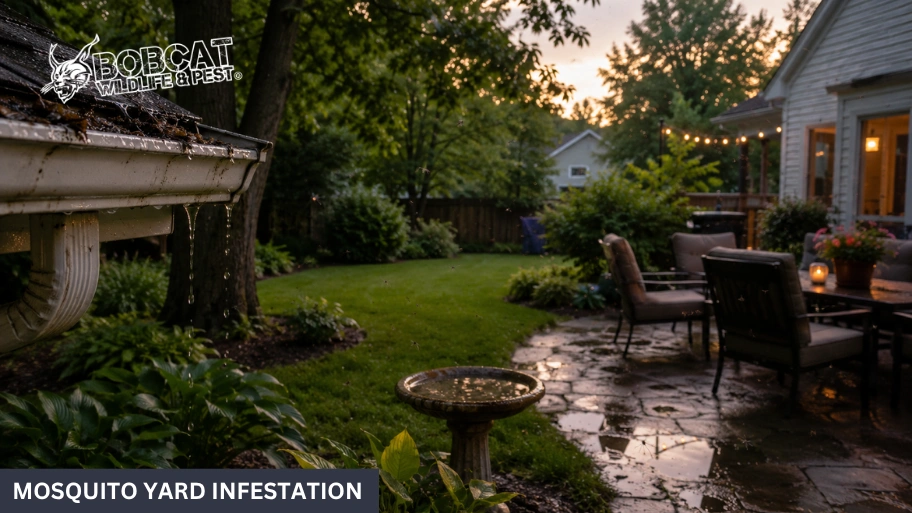
Standing water around the yard, clogged gutters, shaded landscaping, and damp areas near homes can quickly become mosquito breeding spots during Iowa mosquito season.
According to Derek Brownmiller of Bobcat Wildlife & Pest Management, many homeowners are surprised by how little water mosquitoes need to multiply around a property, especially during humid Iowa summers.
Below, we’ll cover why mosquitoes are so bad this year, how to keep mosquitoes away, and when mosquito control in Iowa City may be worth considering.
What This Guide Covers:
Why Mosquitoes Become a Bigger Problem Around Iowa City Homes During Summer
Some Iowa City properties naturally deal with heavier mosquito activity than others once summer weather settles in across the area.
Mosquitoes are drawn to places where moisture, shade, and humidity stay consistent throughout the day. Yards that stay damp longer after rain often give mosquitoes more opportunities to rest, hide, and reproduce close to the home.
According to the team at Bobcat Wildlife & Pest Management, many homeowners focus only on standing water but overlook how shaded and humid outdoor conditions can help mosquitoes remain active around a property even when water sources seem minimal.
Several conditions can increase mosquito activity around Iowa City homes, including:
Properties with multiple moisture-heavy conditions at the same time often experience longer periods of mosquito activity throughout the summer.
This is one reason many Iowa City homeowners feel like mosquitoes are worse this year, especially after stretches of rain followed by hot temperatures and calm evenings with little wind.
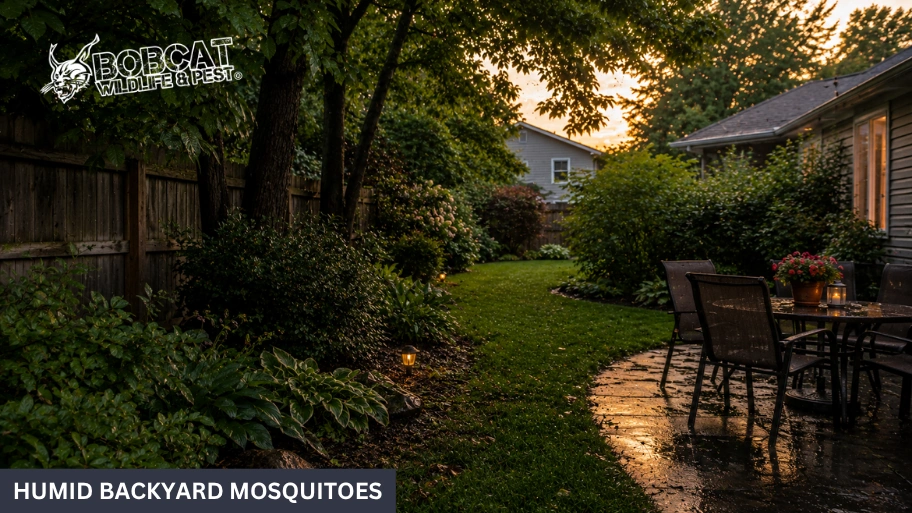
Hidden Mosquito Breeding Areas Around Iowa City Homes Many People Miss
Many Iowa City homeowners search for one major mosquito source around the yard, but mosquito activity often builds from several small problem areas that are easy to ignore during normal outdoor routines.
According to the team at Bobcat Wildlife & Pest Management, some of the most overlooked mosquito hotspots around Iowa City homes include:
One issue many homeowners overlook is how quickly mosquitoes can return when multiple small breeding areas exist around the same property.
Even if one water source is removed, mosquitoes may still continue reproducing nearby if other damp areas remain untreated or unnoticed.
Mosquitoes can be hard to manage because they hide in cool, shady spots during the hottest part of the day. They come out and start flying around again when it gets cooler in the evening.
This is why some Iowa City homeowners still experience heavy mosquito activity even after cleaning up visible standing water around the yard.
In many cases, the problem comes from a combination of hidden moisture spots and protected resting areas spread throughout the property rather than one obvious breeding source alone.
Ways Iowa City Homeowners Can Help Reduce Mosquito Activity Around the Yard
If you are trying to figure out how to reduce mosquitoes around your property, the main goal is making the yard less attractive for mosquitoes to breed, rest, and stay active during the summer.
Even small maintenance habits can help reduce mosquito pressure around outdoor living spaces during Iowa mosquito season.
Here are several practical ways Iowa City homeowners can help keep mosquitoes under control around the yard:
According to the team at Bobcat Wildlife & Pest Management, many mosquito problems around Iowa City homes become worse when small moisture issues continue building week after week without being addressed.
One thing many homeowners do not realize is that mosquito populations can rebound quickly after rainstorms, especially during stretches of warm and humid weather.
For homeowners trying to figure out how to get rid of mosquitoes outside, consistent yard maintenance usually works better long term than relying only on occasional sprays or temporary mosquito repellents.
Why Certain Iowa City Properties Experience More Mosquito Activity Than Others
Some Iowa City homes naturally experience more mosquito pressure than nearby properties because certain outdoor conditions make it easier for mosquitoes to survive and spread throughout the summer.
According to the team at Bobcat Wildlife & Pest Management, the properties with the heaviest mosquito activity are often connected to conditions such as:
These types of environments can stay cooler and more humid during the day, which helps mosquitoes remain active longer around the property.
One thing many homeowners do not realize is that mosquitoes often avoid direct sunlight and strong airflow during hotter parts of the day. Instead, they gather in shaded resting areas until temperatures cool later in the evening.
This is one reason why some Iowa City homeowners notice heavier mosquito activity around decks, seating areas, and backyard gathering spaces shortly before sunset.
The Bobcat team also commonly sees mosquito problems become more difficult to manage when several moisture-retaining conditions exist together around the same property.
Even when nearby homes seem less affected, yards with long-lasting shade, trapped humidity, and poor drainage can continue attracting larger mosquito populations throughout Iowa mosquito season.
When Mosquito Control Services Start Becoming Worth Considering
For many Iowa City homeowners, mosquito activity eventually reaches a point where normal yard maintenance and prevention efforts are no longer enough to keep outdoor spaces comfortable.
This often happens during peak Iowa mosquito season when repeated rainfall, humidity, and warm evenings allow mosquito populations to keep rebuilding around the property faster than homeowners can manage on their own.
Professional mosquito control in Iowa City often becomes worth considering when homeowners begin dealing with:
- 1
Mosquito swarms after heavy rain
- 2
Recurring mosquito problems every summer
- 3
Difficulty enjoying patios, decks, or backyard spaces
- 4
Constant mosquito activity during outdoor gatherings
- 5
Large properties with shaded or wooded areas
- 6
Yards near creeks, retention ponds, or heavy landscaping
According to the team at Bobcat Wildlife & Pest Management, many homeowners wait until mosquito populations are already widespread before looking into treatment options.
One thing that makes mosquito problems difficult during Iowa summers is that new mosquito activity can continue developing after nearly every stretch of rain if breeding conditions remain around the property.
The Bobcat team also commonly sees mosquito pressure become harder to reduce once mosquitoes spread across multiple resting and breeding areas at the same time.
For Iowa City homeowners dealing with recurring mosquito problems, professional mosquito control is often used to help lower mosquito activity throughout the season and make outdoor areas more usable again during the summer months.
Common Mosquito Prevention Mistakes Iowa City Homeowners Often Overlook
Many Iowa City homeowners try different ways to reduce mosquitoes around the yard, but certain prevention mistakes can allow mosquito activity to continue building throughout the summer.
According to the team at Bobcat Wildlife & Pest Management, one of the most common mistakes homeowners make is focusing only on visible mosquito activity instead of addressing the conditions that allow mosquitoes to keep returning.
By the time mosquitoes are consistently active around patios, decks, or outdoor gathering spaces, mosquito populations may already be spreading across several areas of the property.
Some other common mosquito prevention mistakes include:
The Bobcat team also commonly sees homeowners underestimate how quickly mosquito populations can rebound after rainfall during Iowa’s humid summer months.
Another issue is that many DIY mosquito treatments focus mostly on adult mosquitoes while leaving behind the damp conditions that continue attracting new mosquito activity around the property.
For Iowa City homeowners wondering how to keep mosquitoes away more effectively, reducing breeding and resting conditions early in the season usually creates better long-term results than relying only on short-term repellents or occasional treatments.
FAQs About Mosquito Control in Iowa City
When do mosquitoes come out in Iowa?
Mosquitoes usually start becoming active in Iowa during spring once temperatures remain consistently warm, especially after periods of rain.
In Iowa City, homeowners often begin noticing mosquito activity increase between late April and early May, with activity becoming much heavier during the humid summer months.
Mosquito populations usually peak during stretches of warm evenings, high humidity, and repeated rainfall.
Why are mosquitoes so bad this year in Iowa?
Mosquitoes tend to become worse during years with frequent rain, warm temperatures, and long periods of humidity.
These conditions allow standing water to collect around homes while also helping mosquitoes survive longer outdoors.
In Iowa City, mosquito activity often increases quickly after back-to-back storms because new breeding areas continue forming around gutters, landscaping, low spots in yards, and outdoor containers.
What attracts mosquitoes to my backyard?
Mosquitoes are usually attracted to moisture, shade, standing water, and areas with limited airflow.
Backyards with thick landscaping, bird baths, clogged gutters, overwatered lawns, or damp shaded corners often create ideal conditions for mosquitoes.
One thing many homeowners overlook is that mosquitoes also prefer quiet resting areas during the daytime, especially around patios, decks, fences, and dense shrubs.
How do I get rid of mosquitoes in my yard?
The best way to reduce mosquitoes in your yard is by making the property less favorable for breeding and resting.
Removing standing water, improving drainage, trimming thick vegetation, and reducing damp shaded areas can all help lower mosquito activity.
Many Iowa City homeowners also find that staying consistent with prevention throughout the summer works better than waiting until mosquito activity becomes severe.
How do you get rid of mosquitoes outside naturally?
Some homeowners try natural mosquito prevention methods such as improving airflow with outdoor fans, refreshing bird bath water often, using citronella products, and trimming moisture-heavy landscaping.
While these steps may help reduce mosquito activity in smaller outdoor spaces, mosquitoes can still continue reproducing nearby if standing water and humid resting areas remain around the property.
How do I keep mosquitoes away from my backyard?
Keeping mosquitoes away usually requires reducing the conditions that attract them in the first place.
Homeowners can help by draining standing water after storms, cleaning gutters regularly, reducing overgrown vegetation, and minimizing damp areas around patios or decks.
Yards that stay shaded and humid during the evening often experience heavier mosquito activity throughout Iowa mosquito season.
Why are mosquitoes worse after rain in Iowa City?
Rain creates fresh standing water around properties, which gives mosquitoes new places to lay eggs and reproduce.
In Iowa City, mosquito activity often spikes several days after storms because water collects in hidden areas such as gutters, toys, tarps, landscaping edges, and drainage spots.
Humid air after rainfall also helps mosquitoes remain active longer during the evening hours.
Can mosquitoes breed in gutters?
Yes. Gutters are one of the most overlooked mosquito breeding areas around homes.
When leaves, debris, or poor drainage cause water to sit inside gutters, mosquitoes can begin reproducing surprisingly quickly.
Older gutter systems or clogged downspouts often make this problem worse during Iowa’s rainy summer season.
What areas around a home commonly attract mosquitoes?
Mosquitoes are commonly attracted to shaded and damp areas around a property.
This often includes thick landscaping, standing water, bird baths, clogged gutters, low spots in the yard, patios with limited airflow, and outdoor storage areas that collect moisture.
Homes near wooded areas, creeks, or drainage zones may also experience higher mosquito pressure during summer.
How do I keep mosquitoes out of my house?
Keeping mosquitoes out of the house usually starts with reducing mosquito activity outside near entry points.
Homeowners should inspect window screens, door seals, and outdoor lighting areas where mosquitoes may gather during the evening.
It also helps to remove standing water close to the home because mosquito activity near entrances can increase the chances of mosquitoes getting indoors.
Why do mosquitoes come out more at dusk?
Mosquitoes are more active at dusk because cooler temperatures and lower sunlight levels help them avoid drying out.
During hot summer afternoons, mosquitoes often hide in shaded vegetation or damp resting areas.
Once evening arrives and temperatures drop, they become much more active around patios, decks, and backyard gathering spaces.
What smells or scents help repel mosquitoes?
Some scents that homeowners commonly use to help repel mosquitoes include citronella, peppermint, eucalyptus, lavender, and lemongrass.
These products may help temporarily in smaller outdoor areas, especially during gatherings.
However, scents alone usually do not solve larger mosquito problems if breeding areas and moisture-heavy conditions remain around the property.
Do shaded yards attract more mosquitoes?
Yes. Shaded yards often create cooler and more humid conditions where mosquitoes can rest comfortably during the daytime.
Properties with dense trees, large bushes, fences with limited airflow, or thick landscaping often experience heavier mosquito activity because these areas hold moisture longer after rain and protect mosquitoes from direct sunlight.
Are mosquitoes worse near ponds, creeks, or wooded areas?
Properties near ponds, creeks, wooded lots, or drainage areas often experience more mosquito activity because these environments naturally provide moisture, shade, and protected breeding conditions.
In Iowa City, homeowners near wooded trails or water-heavy areas commonly notice mosquitoes becoming more active during humid evenings and after rainfall.
How often should mosquito treatments be done during Iowa mosquito season?
The frequency of mosquito treatments usually depends on weather conditions, rainfall, property size, and how severe mosquito activity becomes around the home.
During peak Iowa mosquito season, many homeowners choose recurring treatments because mosquito populations can rebuild quickly after storms and humid weather cycles.
Is professional mosquito control worth it for large backyards?
Professional mosquito control can be especially helpful for large backyards with dense landscaping, wooded areas, drainage problems, or recurring mosquito issues.
Larger properties often contain more hidden breeding and resting areas that are difficult to manage with DIY methods alone.
Many homeowners use professional treatments to make outdoor spaces more usable during summer gatherings and evenings outside.
Is it safe to control mosquitoes around kids and pets?
Professional mosquito control services are typically designed to be applied carefully and according to product guidelines.
Homeowners with children or pets should always discuss treatment timing, drying periods, and application details with their mosquito control provider.
A professional can explain how treatments are used and what precautions may be recommended for the property.
Can standing water in small containers attract mosquitoes?
Yes. Mosquitoes only need a small amount of standing water to begin breeding.
Containers such as flower pots, toys, buckets, tarps, wheelbarrows, bird baths, and clogged gutters can all contribute to mosquito activity around the yard.
Many homeowners are surprised that even small hidden water pockets can support mosquito reproduction during summer.
What time of year is mosquito season worst in Iowa?
Mosquito season in Iowa is usually worst during the hottest and most humid parts of summer, especially between June and August.
Mosquito activity often becomes more intense after repeated rainfall because standing water and humidity create ideal breeding conditions throughout neighborhoods and residential properties.
What can homeowners do early in the season to reduce mosquito problems?
Early prevention can make a major difference before mosquito populations become widespread.
Homeowners can start by cleaning gutters, improving drainage, trimming overgrown landscaping, removing standing water, and checking shaded moisture-heavy areas around the yard.
Addressing these conditions early in the season often helps reduce larger mosquito problems later in the summer.

About the Author
Derek Brownmiller, Area Manager at Bobcat Wildlife & Pest Management, leads with 16+ years in wildlife and pest control. Licensed and experienced, his Iowa City-based team excels in comprehensive, customer-focused solutions. Their mission: superior service in Iowa City and beyond, ensuring homes are safe from wildlife and pests.