If you’re searching how to keep bats out of your house this fall, you probably want clear steps you can use right away.
This guide walks you through simple prevention you can start today, plus how to decide when it is time to call a local professional for help.
All of the tips here are written for Iowa City homeowners, based on how homes in our area are built and how bats behave once cooler weather settles into Johnson County.
What You’ll Learn About Keeping Bats Out:
Why Bats Target Homes Like Yours in the Fall
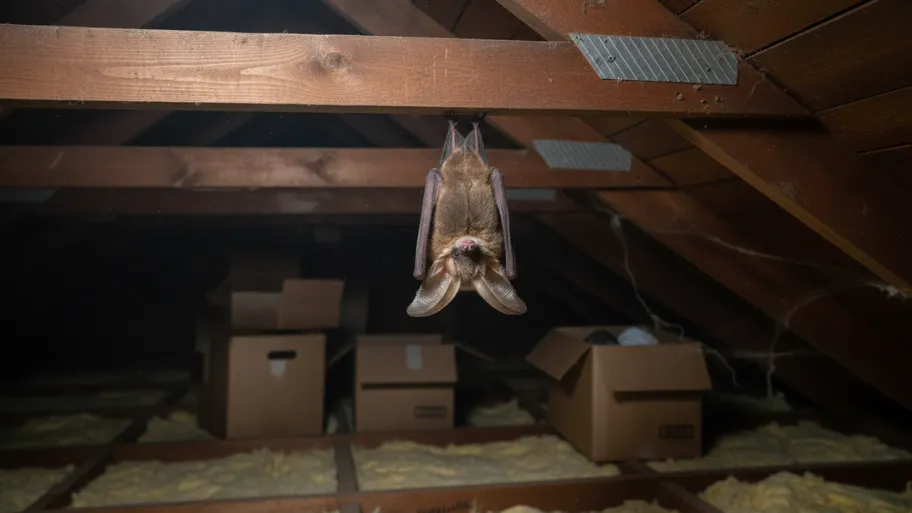
As temperatures dip, bats look for warm, quiet spaces to roost. Attics, chimneys, soffits, gable vents, and thin gaps along the roofline offer the darkness and steady airflow they prefer.
Around Iowa City, older homes in neighborhoods like Northside and Longfellow can develop hairline cracks and weather gaps over time.
Newer builds on the east side may have unsealed spots around utility penetrations and vents. A dime-sized opening is large enough for a bat to slip through.
When those small gaps remain open, your home can feel like an invitation to a colony. Start by checking the most common access points:
Attic and gable vents, including ridge caps
Loose or aging soffit and fascia boards
Unscreened or damaged chimney flues
Gaps around exhaust pipes, cable lines, and other utility entries
Before prevention steps, make sure bats have not already moved in. Next, we will cover the tell-tale signs Iowa City homeowners notice when bats settle into attics or walls.
Signs You May Already Have Bats Indoors
Before you focus on how to keep bats out of your Iowa City home, it’s smart to recognize the early warning signs that bats may already be inside your attic or walls.
Because bats are quiet and prefer hidden spaces, most homeowners don’t realize they have a problem until the signs become too obvious to ignore.
By checking common entry points and areas around your home, you can spot bat activity early and handle it before it develops into a larger infestation.
If you’ve ever wondered how to know if you have a bat infestation, here are the clearest clues:
- 1
Strange noises in the attic after dark
Bats are nocturnal, so scratching, wings fluttering, or faint squeaks coming from above ceilings are one of the first signs of bats in the attic. For homeowners curious about how to know if bats are in your walls, these nighttime sounds are often the earliest giveaway.
- 2
Droppings (guano) near entry points
Look for small, black, pellet-like droppings near attic vents, gable openings, or along window sills. These droppings are one of the clearest signs that bats are entering and roosting nearby.
- 3
A strong, musty smell
Accumulated guano and urine give off an ammonia-like odor. In Iowa City homes, this smell often spreads into living areas below the attic if the colony has been there for a while.
- 4
Dark stains around gaps
Repeated use of the same entry point leaves greasy smudges around soffits, chimneys, and siding. These markings usually show exactly where bats are slipping in.
If you suspect bats are already inside, the safest option is to schedule a professional inspection. Trained experts can confirm the infestation, remove the bats humanely, and seal off access points to stop them from returning.
In the next section, we’ll cover the most effective prevention strategies for how to keep bats out of your Iowa City home this fall, so you can safeguard your property before the problem grows.
How to Keep Bats Out of Your Iowa City Home This Fall
Whether you’ve noticed bats swooping near your roofline at dusk or simply want peace of mind before cold weather sets in, prevention is your strongest defense.
These steps focus on how to keep bats out of your Iowa City home so they never get the chance to move in—or return after safe removal.
Seal Small Gaps and Entry Points
The most effective way to stop bats is by closing the openings they use to slip inside. Take a daytime walk around your home and inspect for gaps around:
Roof edges, ridge caps, and gable vents
Loose soffits or fascia boards
Chimneys without secure screens or caps
Utility lines, dryer vents, and exhaust pipes
Since bats can fit through holes as small as a dime, sealing with caulk, fine wire mesh, or weatherproof covers is essential for prevention.
Use One-Way Exclusion Devices at the Right Time
If bats are already inside, sealing immediately can trap them.
Instead, use one-way exclusion devices that let bats exit at night but block their return.
Timing matters in Johnson County. During summer, bats raise pups that can’t fly, so exclusions must wait until fall when young bats are independent. Acting at the right time protects your home while keeping bat families safe.
Make Your Attic Less Attractive
Bats prefer quiet, dark roosting spots. By improving airflow and adding light, you make your attic less appealing.
Installing a small attic fan or using occasional lighting in problem areas can serve as a simple deterrent.
Since bats follow their food source, cutting down on insect activity around your property helps:
Eliminate standing water where mosquitoes breed
Clean up fallen fruit or compost that attracts bugs
Trim back tree branches that create easy roof access
Provide a Safe Alternative with a Bat House
Sometimes the best way to protect your attic is to give bats another place to roost.
Mounting a bat house on a pole or outbuilding encourages them to stay nearby—helping with insect control—without settling inside your home.
For many Iowa City homeowners searching “how to keep bats out,” this balance of safeguarding your home while respecting local wildlife is the ideal long-term solution.
By combining these steps, you’ll have a strong prevention plan in place. While some fixes can be handled as DIY, other measures—like installing exclusion devices—are safest when handled by professionals.
In the next section, we’ll explain why DIY isn’t always enough and when to call experts for safe, legal bat removal in Iowa City.
Why DIY Isn’t Always Enough
While simple prevention tasks—like sealing small gaps or trimming overhanging branches—are safe for most homeowners, dealing directly with bats is another matter. Here’s why professional help is often the only safe choice:
While rabies is uncommon among bats, the possibility is serious enough that even minimal exposure should be taken seriously. A bite or scratch—even one so small it goes unnoticed—can transmit the virus.
Because of this, health officials warn against any direct handling of bats inside Iowa homes.
Accumulated bat droppings (guano) can release spores that cause histoplasmosis, a lung infection triggered when those spores are inhaled.
Without the right protective equipment, cleaning up guano stirs spores into the air, making the process unsafe.
Wildlife Protections in Iowa
In Iowa, several bat species are protected, which means there are strict guidelines on when and how exclusion can be done legally.
Attempting DIY removal at the wrong time of year—or using an improper method—can unintentionally violate state wildlife regulations.
For Iowa City homeowners searching “is it safe to remove bats myself” or “how to keep bats away the right way,” the takeaway is clear: while prevention steps are fine to tackle on your own, removal should always be left to trained professionals.
Licensed experts understand the health risks, follow Iowa’s wildlife laws, and use humane exclusion methods to make sure bats are safely relocated while your home stays protected.
When It’s Time to Call a Professional
If bats have already found their way into your home, the safest and most effective solution is to call Bobcat Wildlife & Pest Management here in Iowa City. Prevention is valuable, but once bats are inside, DIY attempts won’t fully solve the problem.
Here’s why working with a professional makes all the difference:
Licensed specialists use one-way exclusion techniques that allow bats to leave naturally, protecting your family while ensuring the animals are unharmed.
Once the bats are gone, professionals thoroughly inspect and seal every entry point so the colony can’t return.
As an Iowa City–based team, Bobcat understands the mix of historic homes and new builds across Johnson County—and the hidden spots where bats are most likely to sneak in.
With professionals on the job, you don’t have to worry about health concerns, wildlife laws, or whether the bats will come back. The work is done right and backed with confidence.
FAQ: Quick Answers for Iowa City Homeowners
Yes. While most bats avoid people, some can carry rabies. Even a tiny bite or scratch—sometimes too small to notice—can spread the disease.
That’s why Iowa health officials warn against direct contact.
If you find a bat in your home, call Bobcat Wildlife & Pest Management in Iowa City for safe, humane removal.
Bats don’t chew wood like mice, but their droppings (guano) and urine soak into insulation and beams.
Over time, this causes foul odors, stains, and expensive repairs.
If you suspect attic damage in your Iowa City home, schedule a professional inspection before it gets worse.
Entry spots are usually small cracks near rooflines, soffits, chimneys, or vents.
Look for dark, greasy smudges or stains—marks left behind as bats squeeze through.
If you notice these signs on your Iowa City house, sealing should be a top priority.
No. Bats are protected in Iowa, and state laws restrict when and how exclusions can be done.
DIY methods at the wrong time of year can break wildlife regulations. Bobcat Wildlife & Pest Management in Iowa City ensures removal is both legal and humane.
Bats are active at night—you’ll hear fluttering or scratching above ceilings after dark.
Mice tend to gnaw on wood or wires and make noise during the day. Droppings also differ: bat guano appears as small black pellets near vents or gaps.
If you’re unsure, Bobcat Wildlife & Pest Management can inspect and confirm which pest is present.
Bat droppings may release fungal spores that cause histoplasmosis, a lung infection triggered by breathing contaminated dust.
Attempting cleanup without protective gear stirs spores into the air. Safe cleanup requires trained professionals with proper equipment.
No. Trapping bats indoors can injure them and won’t stop them from returning.
The humane approach is installing one-way exclusion devices, which let bats exit at night but block re-entry. Bobcat Wildlife & Pest Management in Iowa City can set these up safely.
Yes. A bat roosting in your attic may occasionally slip into living areas. If it happens more than once, it usually means a colony is inside.
Don’t risk direct contact—call Bobcat Wildlife & Pest Management in Iowa City for safe removal and sealing.
Yes. Once bats find a comfortable roost, they often come back each season.
Unless every gap is sealed, your attic may continue to attract them. Professional sealing is the only way to stop repeat visits.
No. Unlike mice or squirrels, bats don’t gnaw.
Their main damage comes from urine and guano, which weaken insulation and cause long-lasting odors.
Bats are busiest in summer and early fall. As nights cool, they look for warm roosts like attics, barns, or sheds.
That’s why many Iowa City homeowners first notice bat problems during the fall season.
Close the door to contain it, open a window, and let it exit on its own. If it happens again, it’s likely there’s a colony in your attic.
Call Bobcat Wildlife & Pest Management in Iowa City to inspect and exclude them properly.
Not reliably. Bats may avoid high-frequency sounds temporarily, but they quickly adapt.
Long-term prevention depends on exclusion and sealing, not gadgets.
Bright lights can make bats less comfortable, but they won’t solve an infestation.
At best, lights are a short-term deterrent. Real prevention comes from sealing and professional exclusion services.
Experts use one-way exclusion devices to let bats leave safely, then seal every gap with durable materials.
Some may suggest installing a bat house nearby to give bats an alternative roost. This approach keeps bats away from your Iowa City home for good.
Yes. Bats are natural pest control, eating mosquitoes, moths, and other insects every night.
That’s why extermination is never the answer. Humane exclusion is the best way to protect both your home and local wildlife.
Bat urine has a sharp, ammonia-like odor. If you smell it indoors, it often means urine and guano have built up in attic insulation or walls.
This is usually a sign it’s time for professional cleanup.
Bats can slip through cracks as narrow as half an inch. Sealing even the tiniest openings around chimneys, soffits, and vents is crucial for keeping them out of your Iowa City home.
Yes. Bats can host parasites like mites or fleas. These parasites typically remain on the bats themselves, but their presence increases the potential health concerns when bats are roosting inside your home.
Bat exclusion involves guiding bats out of your home through safe exit devices and then sealing all potential entry points to stop them from re-entering.
Pest control usually involves extermination, which is neither legal nor humane for bats in Iowa.
{
"@context": "https://schema.org",
"@type": "FAQPage",
"mainEntity": [
{
"@type": "Question",
"name": "Are bats dangerous for my family or pets in Iowa City?",
"acceptedAnswer": {
"@type": "Answer",
"text": "Yes. While most bats avoid people, some can carry rabies. Even a tiny bite or scratch—sometimes too small to notice—can spread the disease. That’s why Iowa health officials warn against direct contact. If you find a bat in your home, call Bobcat Wildlife & Pest Management in Iowa City for safe, humane removal."
}
},
{
"@type": "Question",
"name": "How do bats damage insulation or wood in my attic?",
"acceptedAnswer": {
"@type": "Answer",
"text": "Bats don’t chew wood like mice, but their droppings (guano) and urine soak into insulation and beams. Over time, this causes foul odors, stains, and expensive repairs. If you suspect attic damage in your Iowa City home, schedule a professional inspection before it gets worse."
}
},
{
"@type": "Question",
"name": "What do bat entry points look like in Iowa homes?",
"acceptedAnswer": {
"@type": "Answer",
"text": "Entry spots are usually small cracks near rooflines, soffits, chimneys, or vents. Look for dark, greasy smudges or stains—marks left behind as bats squeeze through. If you notice these signs on your Iowa City house, sealing should be a top priority."
}
},
{
"@type": "Question",
"name": "Can I legally remove bats from my Iowa City home myself?",
"acceptedAnswer": {
"@type": "Answer",
"text": "No. Bats are protected in Iowa, and state laws restrict when and how exclusions can be done. DIY methods at the wrong time of year can break wildlife regulations. Bobcat Wildlife & Pest Management in Iowa City ensures removal is both legal and humane."
}
},
{
"@type": "Question",
"name": "How can I tell if I have bats or just mice in the attic?",
"acceptedAnswer": {
"@type": "Answer",
"text": "Bats are active at night—you’ll hear fluttering or scratching above ceilings after dark. Mice tend to gnaw on wood or wires and make noise during the day. Droppings also differ: bat guano appears as small black pellets near vents or gaps. If you’re unsure, Bobcat Wildlife & Pest Management can inspect and confirm which pest is present."
}
},
{
"@type": "Question",
"name": "What health risks come from bat guano?",
"acceptedAnswer": {
"@type": "Answer",
"text": "Bat droppings may release fungal spores that cause histoplasmosis, a lung infection triggered by breathing contaminated dust. Attempting cleanup without protective gear stirs spores into the air. Safe cleanup requires trained professionals with proper equipment."
}
},
{
"@type": "Question",
"name": "Can I trap bats and release them outside?",
"acceptedAnswer": {
"@type": "Answer",
"text": "No. Trapping bats indoors can injure them and won’t stop them from returning. The humane approach is installing one-way exclusion devices, which let bats exit at night but block re-entry. Bobcat Wildlife & Pest Management in Iowa City can set these up safely."
}
},
{
"@type": "Question",
"name": "Can bats end up in my living room or bedroom?",
"acceptedAnswer": {
"@type": "Answer",
"text": "Yes. A bat roosting in your attic may occasionally slip into living areas. If it happens more than once, it usually means a colony is inside. Don’t risk direct contact—call Bobcat Wildlife & Pest Management in Iowa City for safe removal and sealing."
}
},
{
"@type": "Question",
"name": "Do bats return to the same house every year?",
"acceptedAnswer": {
"@type": "Answer",
"text": "Yes. Once bats find a comfortable roost, they often come back each season. Unless every gap is sealed, your attic may continue to attract them. Professional sealing is the only way to stop repeat visits."
}
},
{
"@type": "Question",
"name": "Can bats chew through wood or wires like rodents?",
"acceptedAnswer": {
"@type": "Answer",
"text": "No. Unlike mice or squirrels, bats don’t gnaw. Their main damage comes from urine and guano, which weaken insulation and cause long-lasting odors."
}
},
{
"@type": "Question",
"name": "When are bats most active in Iowa?",
"acceptedAnswer": {
"@type": "Answer",
"text": "Bats are busiest in summer and early fall. As nights cool, they look for warm roosts like attics, barns, or sheds. That’s why many Iowa City homeowners first notice bat problems during the fall season."
}
},
{
"@type": "Question",
"name": "What should I do if a bat is flying inside my Iowa City home?",
"acceptedAnswer": {
"@type": "Answer",
"text": "Close the door to contain it, open a window, and let it exit on its own. If it happens again, it’s likely there’s a colony in your attic. Call Bobcat Wildlife & Pest Management in Iowa City to inspect and exclude them properly."
}
},
{
"@type": "Question",
"name": "Do ultrasonic bat repellents work?",
"acceptedAnswer": {
"@type": "Answer",
"text": "Not reliably. Bats may avoid high-frequency sounds temporarily, but they quickly adapt. Long-term prevention depends on exclusion and sealing, not gadgets."
}
},
{
"@type": "Question",
"name": "Can bright lights keep bats away from my attic?",
"acceptedAnswer": {
"@type": "Answer",
"text": "Bright lights can make bats less comfortable, but they won’t solve an infestation. At best, lights are a short-term deterrent. Real prevention comes from sealing and professional exclusion services."
}
},
{
"@type": "Question",
"name": "How do professionals keep bats out long-term?",
"acceptedAnswer": {
"@type": "Answer",
"text": "Experts use one-way exclusion devices to let bats leave safely, then seal every gap with durable materials. Some may suggest installing a bat house nearby to give bats an alternative roost. This approach keeps bats away from your Iowa City home for good."
}
},
{
"@type": "Question",
"name": "Are bats good for the environment?",
"acceptedAnswer": {
"@type": "Answer",
"text": "Yes. Bats are natural pest control, eating mosquitoes, moths, and other insects every night. That’s why extermination is never the answer. Humane exclusion is the best way to protect both your home and local wildlife."
}
},
{
"@type": "Question",
"name": "What does bat urine smell like?",
"acceptedAnswer": {
"@type": "Answer",
"text": "Bat urine has a sharp, ammonia-like odor. If you smell it indoors, it often means urine and guano have built up in attic insulation or walls. This is usually a sign it’s time for professional cleanup."
}
},
{
"@type": "Question",
"name": "How small of a gap can a bat fit through?",
"acceptedAnswer": {
"@type": "Answer",
"text": "Bats can slip through cracks as narrow as half an inch. Sealing even the tiniest openings around chimneys, soffits, and vents is crucial for keeping them out of your Iowa City home."
}
},
{
"@type": "Question",
"name": "Do bats carry fleas or mites?",
"acceptedAnswer": {
"@type": "Answer",
"text": "Yes. Bats can host parasites like mites or fleas. These parasites typically remain on the bats themselves, but their presence increases the potential health concerns when bats are roosting inside your home."
}
},
{
"@type": "Question",
"name": "What’s the difference between bat exclusion and pest control?",
"acceptedAnswer": {
"@type": "Answer",
"text": "Bat exclusion involves guiding bats out of your home through safe exit devices and then sealing all potential entry points to stop them from re-entering. Pest control usually involves extermination, which is neither legal nor humane for bats in Iowa."
}
}
]
}
Protect Your Iowa City Home Before Winter Arrives
As fall turns into colder weather, bats begin seeking out warm, hidden places to roost. Acting now helps you avoid the hassles of attic noises, guano buildup, and the stress of an infestation once winter sets in.
The good news? With the right prevention steps—and help from trusted local professionals—you can keep your Iowa City home secure and comfortable all season long.
Don’t wait until bats settle in. Call Bobcat Wildlife & Pest Management in Iowa City today to protect your property this fall.
Our licensed specialists use safe, humane exclusion methods, seal every entry point, and ensure your Iowa City home stays protected and worry-free through the winter months.