
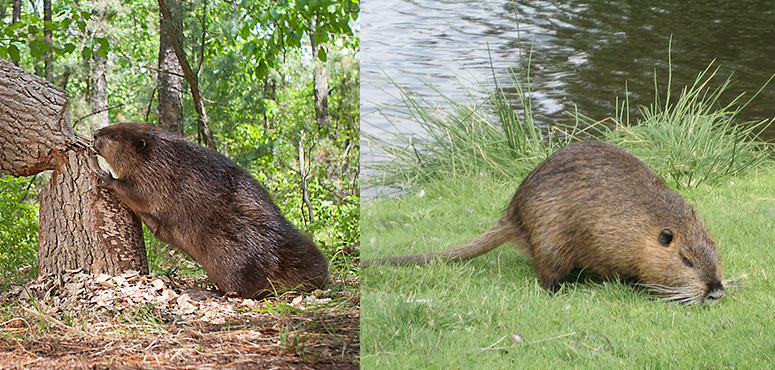
Muskrats are prolific breeders with 2-14 kits per litter. They can be found along river banks building intricate tunnels. They often eat reeds.
A beaver is the largest aquatic rodent. A beaver’s teeth are high in iron content with makes them yellow and ideal for chewing on trees. A beaver will typically dam up a stream and build a den near the bank. They feed on the inner layer of bark on trees.
WHAT TO LOOK FOR
With Muskrats, look for piles of reeds on the shoreline. Also look for evidence of tunnels, holes, and disturbance of the water bank.
For beaver, some signs to look for are cut down trees close by the water, slides leading from the water to cut down trees, dams across streams. Culvers stuffed full of branches are another indication of possible beaver activity. Beavers can cut down a five-inch tree in about three minutes.
BEAVER & MUSKRAT CONTROL
Usually, once a beaver or muskrat moves into a water area and finds good habitat, the only way to solve the issue is to have a wildlife professional remove the beaver.
Install a wire barrier at least three feet in height around valuable trees, keeping about 1-foot minimum clearance around the trunk.
MAIN ISSUES


In early 2023, we discovered we had mice in our attic. After calling several pest control companies, we chose Bobcat since they presented an approach that seemed reasonably priced and thorough. I’m pleased to report the mice are gone and we no longer hear wood chewing sounds coming from the attic. Derek is extremely knowledgeable and readily answers any questions that we may have. Although our initial reason for having Bobcat help us out was to eliminate mice in the attic and eliminate how they were getting inside the house, Derek has helped prevent other pests that would regularly bother us, and was dependent on the season.